Alandi, the holy town on the banks of the Indrayani river near Pune and the samadhi-sthan of Sant Dnyaneshwar, is also home to a number of local marriage registration services. Couples planning a court marriage, a registered marriage, or even a traditional Hindu Vedic wedding in or around Alandi increasingly turn to these local "vivah sanstha" (marriage institute) services for help with paperwork, documentation, and ceremony logistics.
This guide walks through what registered marriage means, which documents you'll typically need, what facilities local institutes in Alandi commonly offer, and a few sensible precautions to take before you hand over any documents or money.
What Does "Registered Marriage" Mean?
A registered marriage is one that is formally recorded with a government marriage registrar under the Hindu Marriage Act, 1955 (for Hindu marriages) or the Special Marriage Act, 1954 (for inter-religious or civil marriages). Local institutes in Alandi typically help couples with:
- Registered Arranged Marriage
- Court Arranged Marriage
- Registered Love Marriage
- Court Love Marriage
- Live-in Relationship registration/documentation support
Once registered, the marriage certificate becomes a legally recognized document, useful for passports, visas, joint bank accounts, property and inheritance matters, and name changes.
Documents Typically Required
- Address Proof: Aadhar Card — for Groom, Bride, and all 3 Witnesses
- Age Proof: Birth Certificate / Leaving Certificate (LC) / Bonafide Certificate / 10th Marksheet / PAN Card (any 2 of these 4)
- Photographs: Passport-size photos — 3 each for Groom and Bride, plus 1 photo per witness
- Witnesses: 3 witnesses with their own Aadhar Card and ID/residence proof
Facilities Commonly Offered
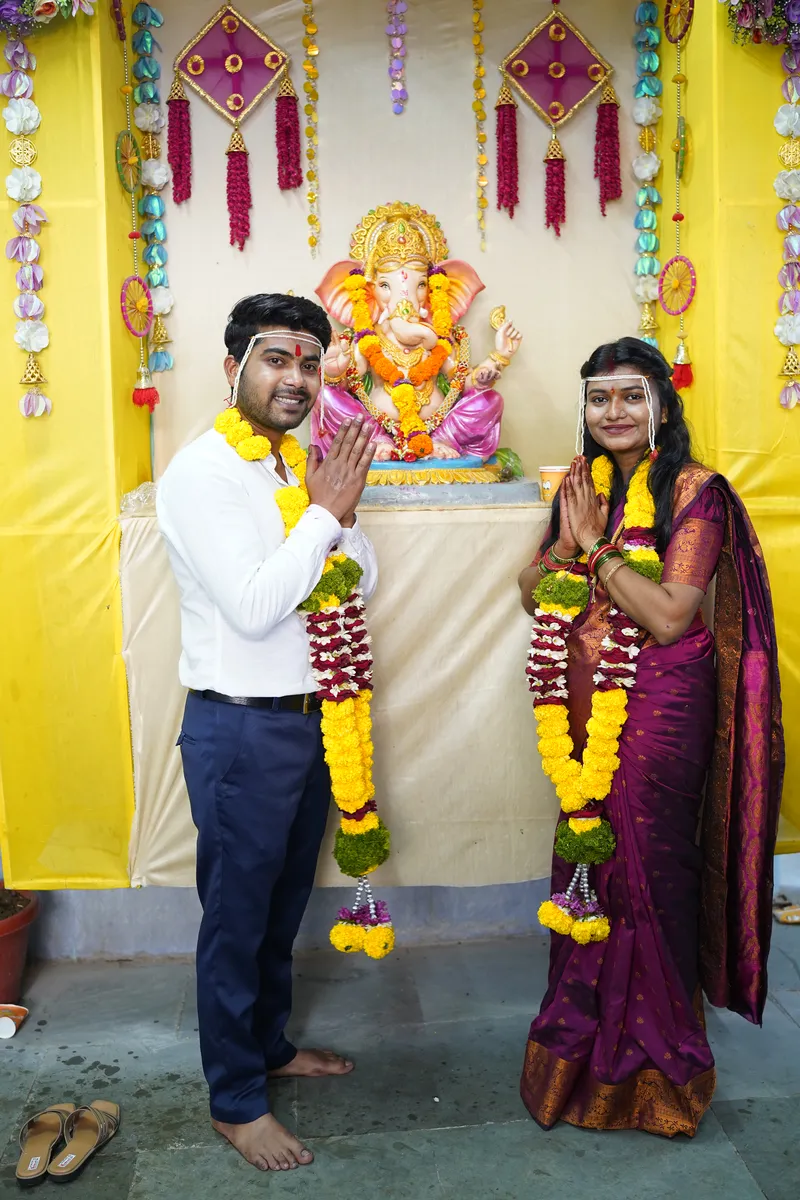
- Marriage hall arrangement with a Brahmin priest for traditional rites
- Catering and photography services
- Police protection application assistance (useful for inter-caste or love marriages)
- Complete wedding rituals, ritual items, garlands, groom's pheta (turban), and mundavalya
- Same-day / "tatkal" (instant) registered marriage certificate processing
How the Process Usually Works
- Visit the local registrar's office or marriage institute with the documents listed above.
- Submit documents for the bride, groom, and three witnesses.
- Appear before the marriage officer along with the witnesses for verification.
- Complete the registration formalities — this can often be finished within a day if all paperwork is in order.
- Receive the registered marriage certificate, which is legally valid across India and generally recognized internationally.
Choosing a Local Marriage Institute
Several private "vivah sanstha" (marriage institute) businesses operate around Alandi, often advertising the same kind of services — registered marriage, court marriage, tatkal certificates, and full ceremony management. Before booking with any of them, it's worth taking a few simple precautions:
- Ask for a visiting address and visit the office in person if possible, rather than relying only on a WhatsApp number.
- Confirm whether the certificate they issue is registered with the actual government Sub-Registrar / Marriage Registrar office — a genuinely valid certificate must ultimately be backed by government registration, not just an institute's own paperwork.
- Get a clear, written estimate of charges before handing over original documents.
- Keep photocopies of every document you submit, and ask for a receipt.
Book Your Consultation Today
Whether you're planning a traditional Hindu Vedic ceremony, a simple court marriage, or need urgent documentation for a love marriage, Alandi's local marriage institutes offer end-to-end support.
Contact: 9921751408 / 8805934808
Address: Kelgaon Road, Chakan Chowk, Alandi Devachi, Pune
This article is for general informational purposes only and is not legal advice. Always verify current requirements with the official government Marriage Registrar's office before proceeding.